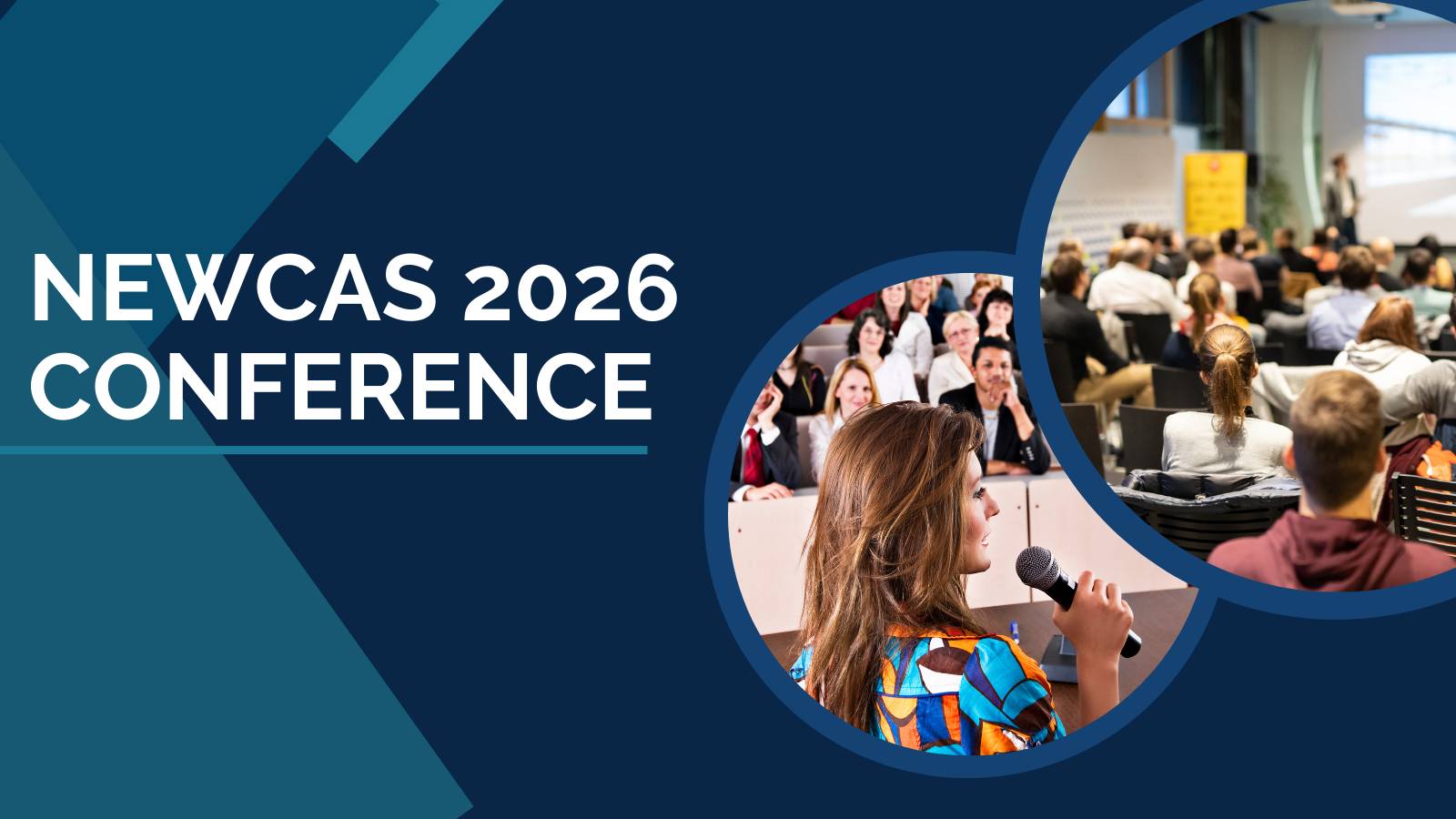
The IEEE International NEW Circuits and Systems Conference (NEWCAS) is a global platform dedicated to research and innovation in circuits, systems, and emerging electronic technologies. It is supported by the IEEE Circuits and Systems Society and brings together researchers, academicians, and industry professionals to share advanced ideas and developments.
Below find all the key details about NEWCAS 2026, including important dates, paper submission guidelines, registration process, and step-by-step instructions for authors and participants to successfully take part in the conference.
What Is the NEWCAS Conference?
The NEWCAS conference, officially known as the IEEE International NEW Circuits and Systems Conference, is an annual IEEE-sponsored international conference dedicated to advancing research in circuits, systems, and related interdisciplinary domains. It is technically supported by the IEEE Circuits and Systems Society, which is one of the most influential IEEE societies worldwide.
Purpose and Vision of the NEWCAS Conference
- NEWCAS aims to promote innovative thinking in circuits and systems by encouraging researchers to present original and well-validated ideas.
- The conference supports cross-domain interaction, allowing specialists from analog design, digital systems, biomedical electronics, RF engineering, and AI hardware to learn from each other.
- It plays a critical role in shaping future research directions, as many ideas presented at NEWCAS later evolve into journal publications and commercial technologies.
Key Components of the Conference
- Keynote talks that go beyond textbooks, offering strategic insights into future industry and research trends.
- Oral and poster presentation sessions, enabling in-depth technical discussions and expert feedback.
- Tutorials and special sessions, which are especially valuable for young researchers who want structured learning on emerging topics.
- Professional networking opportunities, helping participants form collaborations, joint projects, and even postdoctoral or industry connections.
Because all accepted papers are indexed in IEEE Xplore, authors gain long-term visibility and credibility in the academic ecosystem.
NEWCAS 2026 Important Dates and Timeline
The NEWCAS 2026 conference follows a strict academic schedule that researchers must adhere to in order to participate successfully. Based on official conference information, the key timeline is as follows:
- Full Paper Submission Deadline – February 23, 2026
- Review Process & Evaluation Phase – February to April 2026
- Notification of Acceptance – April 10, 2026
- Camera-Ready Paper Submission Deadline – May 10, 2026
- Conference Registration Deadline – May 2026 (Exact date TBA)
- Conference Dates – June 21 to June 24, 2026
- For more details visit.
Paper Submission Guidelines for NEWCAS 2026
Submitting a paper to NEWCAS requires strict adherence to IEEE standards and conference guidelines.
All papers must follow the IEEE double-column format and are typically limited to four pages of technical content, with an optional fifth page for references. The submission must be in PDF format and IEEE Xplore compliant, ensuring proper formatting and readability.
The research paper should clearly include:
- Problem statement and research motivation
- Methodology and technical approach
- Experimental results or simulations
- Conclusion and future scope
Authors must ensure that the research is original, unpublished, and not under review elsewhere. Plagiarism checks are strictly enforced, and any violation can result in immediate rejection.
The conference covers a wide range of topics including:
- VLSI and integrated circuit design
- Biomedical circuits and systems
- IoT and embedded technologies
- AI and machine learning hardware systems
- Energy-efficient computing systems
- Quantum and emerging technologies
A well-structured and clearly written manuscript significantly improves the chances of acceptance during peer review.
Step-by-Step Registration Process for NEWCAS 2026
The registration process for NEWCAS 2026 ensures a smooth transition from paper acceptance to final conference participation. It is structured to guide authors and attendees through each required stage clearly and efficiently.
- Create an account on the official NEWCAS submission portal for paper submission and profile management.
- Submit the research paper and wait for the review process and acceptance notification.
- After acceptance, log in and proceed to the registration section of the portal.
- Select the appropriate participant category (student, IEEE member, or non-member).
- Check the applicable registration fee based on the selected category.
- Complete the payment using available online methods such as credit card or bank transfer.
- Ensure registration is completed before the official deadline.
- Receive a confirmation email after successful registration.
- Save the confirmation receipt for visa processing, travel arrangements, and conference entry.
How to Submit Paper to NEWCAS: Step-by-Step Guide
Submitting a paper to NEWCAS requires careful attention to detail and adherence to IEEE standards. Following a structured approach ensures that your work receives proper consideration and avoids delays or rejection. Below is a detailed step-by-step guide for authors:
Step 1: Review the Call for Papers
Before starting your manuscript, thoroughly read the official Call for Papers (CFP).
- Study the technical tracks and thematic areas carefully to ensure your research aligns with the conference scope. Submissions outside the defined areas may be rejected without review.
- Note the submission rules, including page limits, formatting guidelines, and deadlines. Missing even small requirements can lead to desk rejection.
- Identify whether your work fits best under theoretical research, applied systems, or emerging technologies like AI accelerators, IoT architectures, or sustainable electronics. Aligning your paper with the correct track improves visibility and reviewer engagement.
Step 2: Prepare the Manuscript
Once you confirm your topic, prepare your manuscript using the official IEEE conference template.
- Clearly articulate the problem motivation, objectives, methodology, results, and conclusions. Your manuscript should guide readers logically through your research contribution.
- Ensure technical clarity by avoiding ambiguity and using precise terminology. Include figures, tables, and diagrams to illustrate key points.
- Reference prior work correctly, adhering to IEEE citation standards. Proper citations not only strengthen your arguments but also demonstrate scholarly rigor.
- Proofread the manuscript carefully to eliminate typographical errors, inconsistencies, or formatting mistakes. High-quality presentation reflects professionalism and increases chances of acceptance.
Step 3: Online Submission
Submit your manuscript through the designated submission system, typically EDAS or EasyChair, as specified in the CFP.
- Create an account in advance and verify your login credentials to avoid last-minute issues.
- Enter accurate author information, including affiliations, emails, and ORCID (if available). This ensures proper acknowledgment and inclusion in conference proceedings.
- Select the appropriate technical track for your paper. Choosing the correct category helps assign your work to suitable reviewers and increases chances of acceptance.
- Double-check that all files (manuscript, supplementary materials, and any required forms) are uploaded correctly before finalizing submission.
Step 4: Review and Decision
After submission, your paper undergoes the rigorous NEWCAS peer-review process.
- Reviewers assess originality, technical depth, clarity, methodology, and relevance to the conference theme. Each paper is evaluated by multiple experts to ensure fairness and minimize bias.
- Authors may receive requests for revisions based on reviewer feedback. Respond professionally and address all comments thoroughly, improving the quality and clarity of your work.
- Even if a paper is not accepted, the detailed feedback helps authors strengthen their research for future submissions.
Step 5: Camera-Ready Submission
Once your paper is accepted, prepare the camera-ready version for publication in the official IEEE proceedings.
- Carefully incorporate reviewer comments and ensure that all figures, tables, and references meet formatting requirements.
- Upload the final manuscript along with the copyright form to grant IEEE publication rights.
- Double-check that the paper adheres strictly to the IEEE template, including font, spacing, section formatting, and page limits. Mistakes at this stage can delay inclusion in the proceedings.
- Completing this step accurately ensures your work is officially published, visible to the global research community, and recognized in your professional portfolio.
Following these steps systematically ensures a smooth submission process and maximizes the chances of having your research accepted and presented at NEWCAS 2026. Proper preparation, alignment with the conference scope, and adherence to IEEE standards are key to success.
Researchers should carefully track NEWCAS conference dates, respect the NEWCAS deadline for papers, complete NEWCAS registration on time, and follow the submission process with precision. Proper preparation not only improves acceptance chances but also ensures a rewarding and professionally valuable conference experience.
FAQs
1. What is the typical acceptance rate for NEWCAS papers?
The acceptance rate at NEWCAS varies each year depending on the number of submissions, but historically it ranges from 35% to 50%. A lower acceptance rate reflects the conference’s rigorous peer-review process and high academic standards. Preparing a well-structured and technically robust paper significantly improves acceptance chances.
2. Are there travel grants or financial support options for students?
Yes, NEWCAS often provides travel grants or financial support for student authors and young researchers. Grants may cover partial registration fees or travel expenses. Applicants usually need to submit a formal request or recommendation from their supervisor along with proof of enrollment.
3. Can non-authors attend the NEWCAS conference?
Absolutely. Non-authors, industry professionals, and academics can register as participants. They gain access to keynote talks, tutorials, and networking events. However, only registered authors can present papers and have their work published in IEEE Xplore.
4. Are previous NEWCAS papers accessible online?
Yes, all accepted papers from past NEWCAS conferences are available in IEEE Xplore, which allows researchers to review past research trends, methodologies, and technical insights. Access may require an IEEE membership or institutional subscription.
5. Is there a specific dress code for presenting at NEWCAS?
While there’s no strict dress code, professional or business casual attire is recommended for presentations, keynote sessions, and networking events. Dressing professionally helps create a positive impression during discussions with experts and potential collaborators.
6. How long is a typical paper presentation at NEWCAS?
Paper presentations usually last 15–20 minutes, followed by 5–10 minutes for Q&A. Poster presentations are often scheduled for longer interactive sessions where authors can discuss their research in detail with attendees.
7. Can authors submit multiple papers to NEWCAS?
Yes, authors can submit multiple papers if each paper is distinct and original. However, each submission must adhere to the IEEE guidelines, including separate registration for each accepted paper.
8. Are video or virtual presentations allowed?
Depending on the conference year, NEWCAS may allow virtual or recorded presentations, especially for participants unable to travel. Hybrid formats have become common, but authors are strongly encouraged to present in person for maximum engagement and networking.
9. Can industry professionals present at NEWCAS?
Yes. Industry researchers can submit papers on applied research, prototypes, or case studies. NEWCAS encourages collaboration between academia and industry, making it an excellent venue to showcase real-world applications of circuits and systems.
10. How can I get feedback on my research before submitting to NEWCAS?
Authors can get preliminary feedback by:
- Submitting preprints to arXiv or institutional repositories
- Sharing drafts with mentors, colleagues, or research groups
- Participating in IEEE workshops or webinars before the conference
Early feedback improves manuscript quality, increases acceptance probability, and enhances the clarity of technical content.