
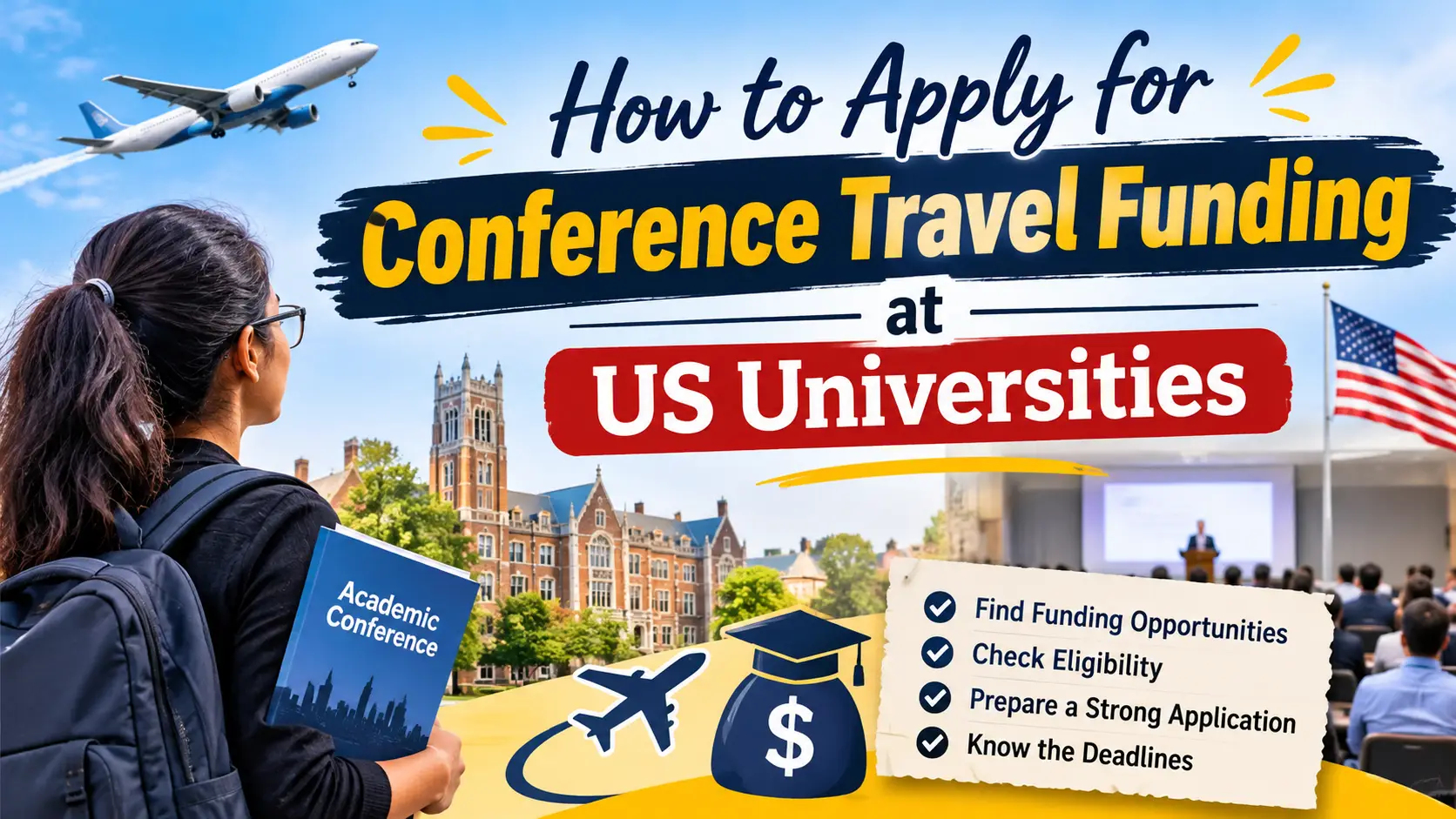
The topic of discussion in today’s article is how to apply for conference travel funding at US universities. Where we will explore some of the ways through which one can apply for funding, such as the sources that can provide them with information regarding upcoming funding, how can they confirm if they can qualify for receiving the funding, what are the deadlines they need to meet, how can they approach the university with the request of funding, what else should they prepare even after receiving the funding, and in the end, a website which can make this process a little easier. So, let’s start!
Different Methods of Applying for Travel Funding at US Universities
1. Understand the different sources of travel funding
Students looking for travel funding at US universities have a few options that can help them receive funding. Let us look at the options:
University Department: It is one of the most common places where a student can enquire about funding. The department the student belongs to sometimes has money on the side, which allows it to assist students in attending academic conferences in the US.
Graduate School: Another method through which a student can receive funding is through Graduate schools. Many universities in the US sometimes have a separate school altogether; these are called the graduate school. Graduate schools help support students with a master’s or PhD by offering them travel grants.
Research Funding: Many times, researchers get funding to carry out a study; students who assisted the researcher in his study can go to any conference to present the research, if the funding allows. So this is another method that allows students in receiving funding.
External Academic Organisations and Associations: It’s a known fact that universities provide students with funds, but apart from these universities, there are several external entities that support students with funding; these are Academic Organisations and/or Associations, that host their own conferences, publish research, and help students with financial assistance. Some of these organizations have offers relating to travel funds, which an eligible student can look into.
Conference-Specific Travel Grants: There are a few conference-specific travel grants that allow eligible students with travel funds or travel in general. A nice initiative for the students who are eligible enough to attend conferences in their field.
2. Check Whether Your Conference and Participation Qualify for Funding
One thing students confuse is that they only qualify for funding, but that’s far from the actual truth. The conference they are aiming for itself first needs to qualify. Many times, the universities have certain criteria which not only requires the student to possess, but also the conferences. The universities mostly support selected conferences, and if the conference falls under those, then only a university qualifies the conference.
After this, it’s the student who needs to qualify. But one thing the student needs to keep in mind is that, even if they are qualified to get travel funding, they need to check what the funding allows them. Some fundings are for students who can present their research in the conference while there are other types of funding which only enables the student to attend the conference but they are not eligible to present their research.
3. Prepare an Application That Justifies the Expense
Universities have a particular budget for endorsing a few (or in some cases, one) students. So they need to see why a student should be funded to go to the conference. The student needs to provide some kind of strong evidence that would represent their case to the university, and it will be easier for them to decide if they want to go ahead with that student.
So the student needs to provide an application explaining why they should be selected for the funding; there, they can explain how going to the conference will help their academic career. If they are presenting their research at the conference, then will it attract eyes of other researchers, receive feedbacks from field experts and fellow researchers, or any other such advantage that the student could receive if they present their research at the conference?
An Application can provide the university with a reason that will help them to decide why they should fund a student in the herds of other students?
They may also want to know how much funding the student requires. And sometimes the student is provided with a faculty advisor who advocates the student’s application to the university, highlighting the points which tells exactly why the student need to attend the conference.
4. Apply before the Deadline and Check the Approved Rules
Now, when we say apply before the deadline, we don’t just mean the application submission deadline, but there are many more deadlines that the student needs to meet before they can get funding of any kind. Types of deadlines include:
- Travel Funding Deadline
- Conference Registration Deadline
- Travel Booking and other arrangements Deadline (sometimes students may face trouble with this because some funding programmes have restrictions)
One thing the student must keep in mind is that all these deadlines may/may not coincide. Suppose a student wants to attend a conference in November, but the university demands that they apply for the funding months before the conference, and the student found out about the conference just a few weeks ago; then applying for the funding might be difficult for the student. Though the conference registration might still be open, the student will not be able to attend because they missed the deadline for applying for funding.
5. Plan for Costs the Funding May Not Cover
This is a very crucial point that many students ignore; they think just because they have been granted funding from the university, all they have to do is go to the conference and present their research. Travel funding will only cover a student’s travel; their stay, food, and other expenses will not be covered by the funding. The student needs to arrange the money for these on their own and cannot depend on just the travel funding to cover all of their expenses.
These are some of the key steps students should follow to secure conference travel funding at US universities, from researching funding opportunities to checking eligibility and meeting application deadlines. To make the search easier, visit ConferenceInc, where you can explore upcoming academic conferences and find opportunities relevant to your field. Start researching early, prepare a strong application, and take the next step toward attending your desired conference!