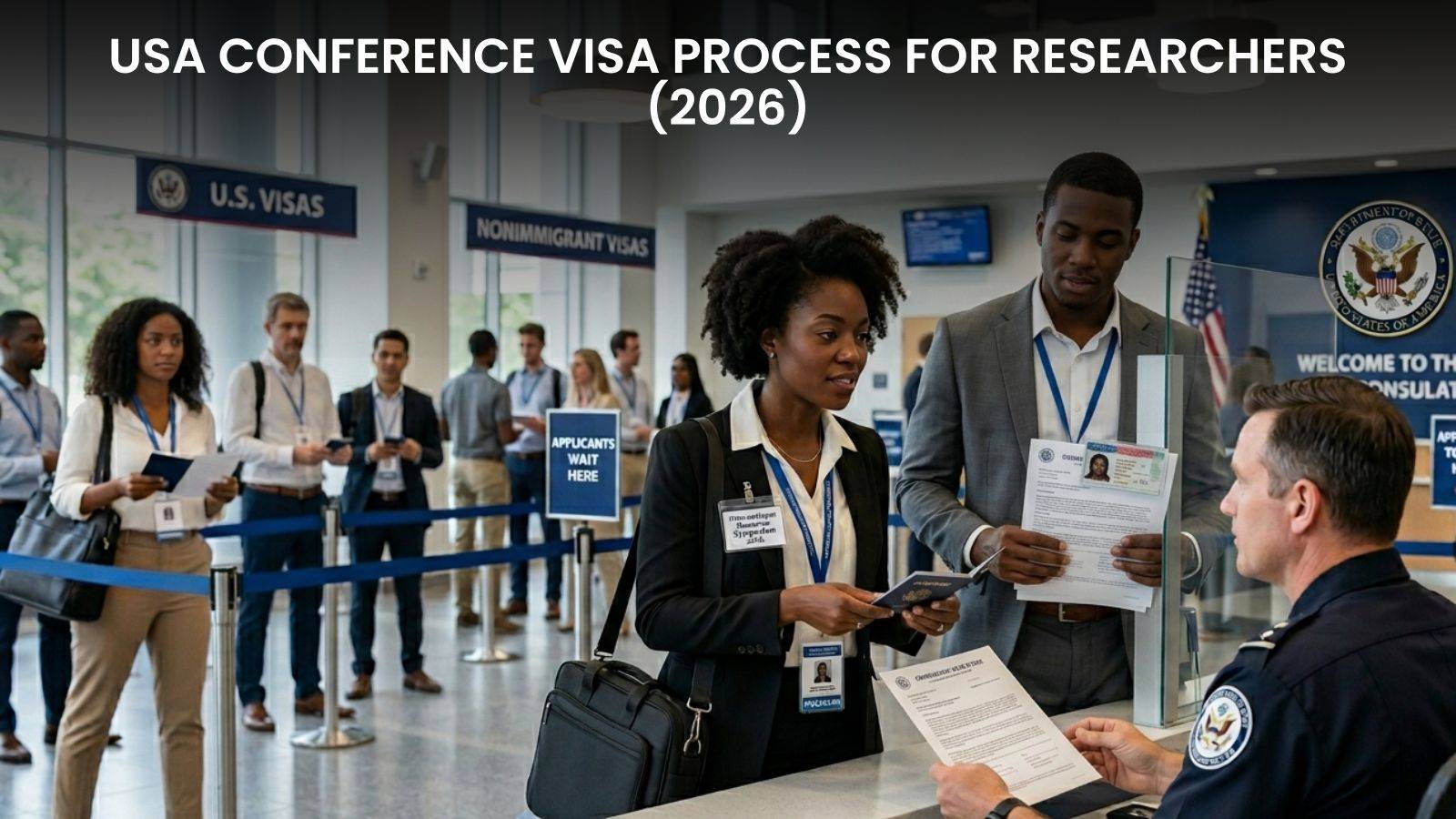
USA Conference Visa is the primary visa option for researchers, academics, and professionals traveling to the United States to Attend Conferences, seminars, and research-related events. Below find the details that covers the visa requirements, application process, essential documents, and common reasons for rejection, helping researchers prepare a strong application and improve their chances of approval in 2026.
What Is a USA Conference Visa for Researchers?
Researchers attending conferences, seminars, or Academic events in the United States typically apply for a B-1 Business Visitor Visa. This visa allows short-term travel for professional activities such as presenting research, attending workshops, participating in discussions, and networking with experts.
The B-1 visa is intended for temporary visits and does not permit employment or regular paid work in the U.S. Applicants must demonstrate that their trip is conference-related and that they plan to return to their home country after the event.
Researchers on a B-1 visa can attend conferences, present papers, meet collaborators, and engage in academic exchanges, making it the most common visa option for conference participation in the United States.
USA Conference Visa Requirements for Researchers
Obtaining a U.S. conference visa requires applicants to provide evidence supporting the purpose of their trip and their intention to return home afterward.
Valid Passport Requirements
Applicants must possess a valid passport that remains valid for at least six months beyond their intended stay in the United States. Some countries may have specific agreements regarding passport validity requirements, but maintaining a valid passport is essential for the application process.
Official Conference Invitation Letter
One of the most important documents is the conference invitation letter issued by the conference organizer. This letter serves as evidence that the researcher has been invited to participate in a legitimate academic event.
The invitation letter should clearly state:
- Conference name
- Conference dates
- Event location
- Applicant’s role
- Presentation details (if applicable)
- Organizer contact information
Conference Registration Confirmation
Researchers should provide proof that they have registered for the conference and paid any required registration fees.
Proof of Research or Academic Affiliation
Applicants should demonstrate their professional status through documentation such as:
- University employment letters
- Research institute verification letters
- Student enrollment certificates
- Faculty appointment letters
- Research project documentation
Financial Support and Funding Documents
Visa officers must be satisfied that applicants can financially support their trip. Researchers should provide:
- Bank statements
- Scholarship documents
- Institutional funding letters
- Employer sponsorship letters
- Grant funding confirmations
Evidence of Strong Ties to Home Country
One of the most important factors in visa approval is demonstrating strong ties to the applicant’s home country.
Examples include:
- Ongoing employment
- Academic enrollment
- Property ownership
- Family commitments
- Research projects requiring return
Strong evidence of these ties helps reassure visa officers that the applicant intends to return home after attending the conference.
Step-by-Step USA Conference Visa Application Process (2026)
Applying for a U.S. conference visa involves several important steps, from obtaining a conference invitation to attending the visa interview. Following the process carefully and preparing the required documents can significantly improve your chances of a successful visa approval.
Step 1: Obtain an Official Conference Invitation
Before beginning the visa process, researchers should secure an official invitation from the conference organizers. The invitation should accurately reflect the applicant’s role and participation.
Researchers presenting papers should ensure their presentation information is included in the invitation whenever possible.
Step 2: Complete the DS-160 Visa Application Form
The DS-160 is the primary online visa application form required by the U.S. Department of State.
Applicants must provide:
- Personal information
- Passport details
- Travel plans
- Employment history
- Educational background
- Security-related information
Accuracy is essential because discrepancies between the application and interview responses may raise concerns during the review process.
Step 3: Pay the Visa Application Fee
Applicants must pay the required non-refundable visa application fee before scheduling their interview.
Payment procedures vary by country, and applicants should follow the instructions provided by the U.S. embassy or consulate where they intend to apply.
Step 4: Schedule a Visa Interview Appointment
After completing the DS-160 and paying the fee, applicants can schedule their visa interview.
Appointment availability varies significantly depending on location, season, and demand. Researchers planning to attend major conferences should begin the process several months in advance to avoid scheduling challenges.
Step 5: Prepare Supporting Documents
Before attending the interview, applicants should carefully organize all required documents.
Preparing a complete application package demonstrates professionalism and helps facilitate a smoother interview experience.
Important documents typically include:
- Passport
- DS-160 confirmation page
- Appointment confirmation
- Invitation letter
- Conference registration proof
- Employment verification
- Academic credentials
- Financial documentation
Step 6: Attend the U.S. Embassy or Consulate Interview
The visa interview allows consular officers to verify the purpose of travel and evaluate eligibility.
Researchers should be prepared to clearly explain:
- Why they are attending the conference
- Their academic or professional background
- Who is funding the trip
- How long they will remain in the United States
- Their plans after the conference
Clear, honest, and consistent responses are essential during this stage.
Step 7: Receive Visa Approval and Passport Return
If approved, the visa will be placed in the applicant’s passport and returned through the designated delivery process. Processing times vary depending on the embassy, workload, and any additional administrative reviews that may be required.
Researchers should avoid making non-refundable travel arrangements until they receive their visa approval.
Essential Documents Checklist for Researchers
Preparing the correct documents is a critical part of the U.S. conference visa application process. Researchers should ensure all required records are complete, accurate, and readily available to support their travel purpose, academic background, and financial capability during the visa review process. Below provided are essential documents checklist for researchers:
- Passport and Visa Application Documents
- Conference Invitation and Registration Records
- Employment or University Verification Letters
- Research Publications and Academic Credentials
- Financial Statements and Sponsorship Letters
Common Reasons for USA Conference Visa Rejection
Although many researchers successfully obtain a U.S. conference visa, applications may be denied if consular officers are not satisfied with the supporting evidence or the applicant’s eligibility. Below are some of the most common reasons for visa rejection:
- Incomplete Documentation
- Weak Financial Evidence
- Insufficient Proof of Academic Purpose
- Failure to Demonstrate Home-Country Ties
- Interview-Related Issues
By planning ahead and following the proper procedures, researchers can navigate the U.S. visa process confidently and maximize the benefits of participating in international conferences throughout 2026.
FAQs
1. How Early Should Researchers Apply for a U.S. Conference Visa?
Most experts recommend beginning the process at least three to six months before the conference date to accommodate interview scheduling and processing times.
2. Can Researchers Attend Multiple Conferences on One Visa?
In many cases, researchers may attend multiple conferences during a single authorized visit, provided the activities remain consistent with the purpose of the visa.
3. Can Family Members Travel With the Applicant?
Family members may be eligible to apply for appropriate visitor visas if they plan to accompany the researcher during the trip.
4. What Should I Do If My Visa Is Denied?
Applicants should carefully review the reason for refusal and address any deficiencies before considering a future application.
5. Can I Extend My Stay After the Conference?
Extensions may be possible under certain circumstances, but approval is not guaranteed and applicants must follow official immigration procedures.