
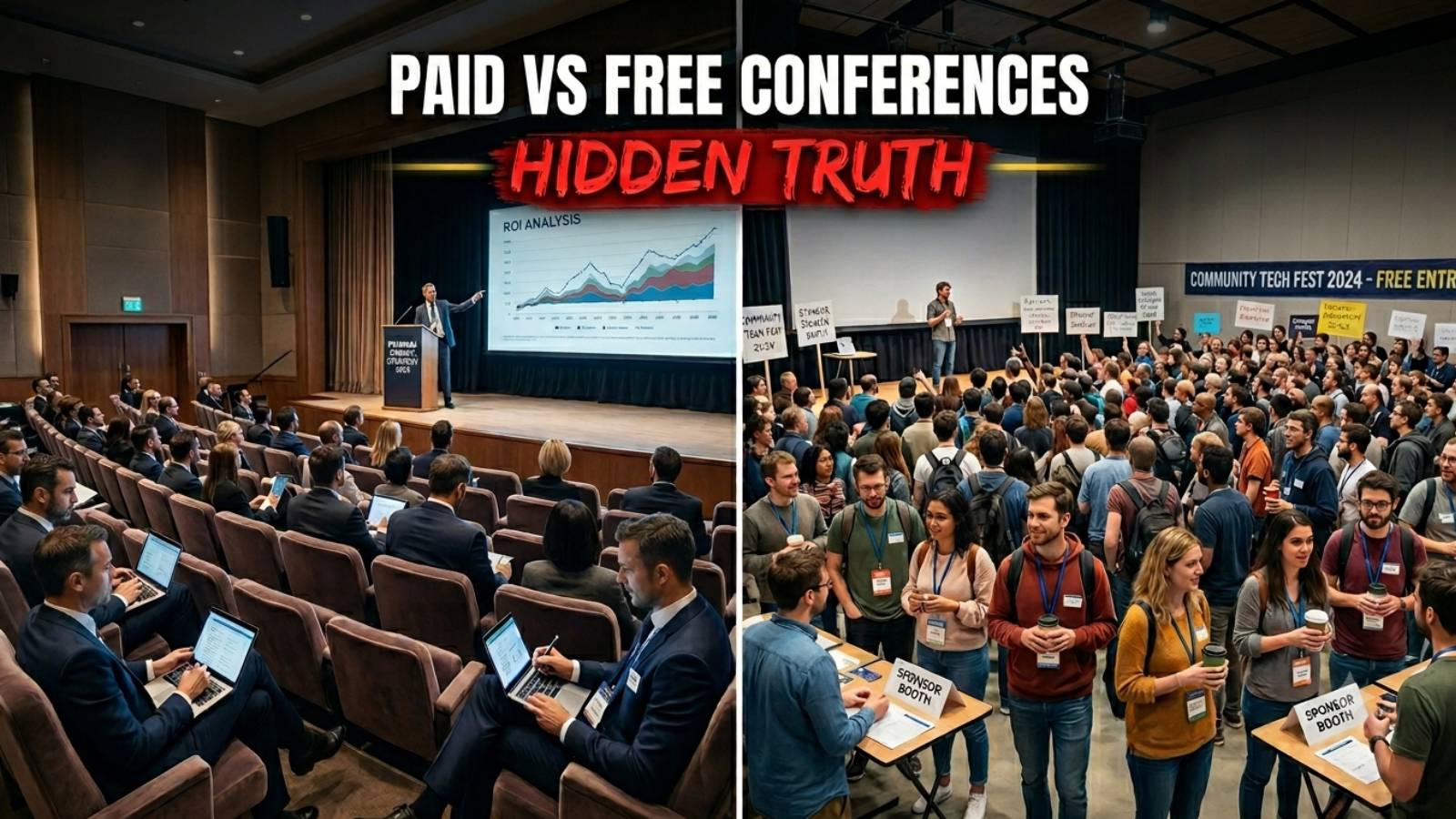
Paid vs Free Conferences play a key role in shaping how professionals, students, and businesses gain knowledge, build networks, and grow in their careers. Free conferences provide accessible learning opportunities without financial barriers, while paid conferences are designed to offer more structured sessions, expert insights, and premium networking experiences. However, the difference goes beyond cost—it reflects the depth of learning, quality of engagement, and long-term career impact.
Understanding this balance between accessibility and premium experience is essential when choosing the right event. Below find the key differences, hidden truths, and real value behind Paid vs Free Conferences to help you make a smarter and more informed decision for your professional growth.
Understanding the Difference Between Paid and Free Conferences
Conferences help professionals, students, researchers, and business leaders learn new skills, gain industry knowledge, and build valuable connections. The main difference between paid and free conferences is the cost of attendance and the type of experience they offer. Free conferences focus on accessibility and attracting a larger audience, while paid conferences often provide premium content, expert speakers, and enhanced networking opportunities.
What Is a Free Conference?
A free conference is an event that allows participants to attend without paying a registration fee. These conferences are usually funded by sponsors, organizations, universities, or government institutions. They are ideal for individuals who want to learn, network, and explore industry trends without financial commitment.
Definition and Common Formats
Free conferences can be organized as educational seminars, industry webinars, community networking events, or Academic conferences. Their primary goal is to share knowledge, promote collaboration, and increase audience engagement.
Virtual vs Physical Free Events
Virtual free conferences allow attendees to participate online from anywhere in the world, making them highly accessible and cost-effective. Physical free conferences take place at specific venues and offer face-to-face networking opportunities, workshops, and direct interaction with speakers.
Who Typically Organizes Them?
Free conferences are commonly organized by universities, nonprofit organizations, professional associations, government agencies, and companies looking to promote their services or products. These organizers often use sponsorships and partnerships to cover event costs.
What Is a Paid Conference?
A paid conference requires attendees to purchase a ticket or registration pass. These events are designed to offer a more structured and premium experience, including access to expert speakers, exclusive workshops, industry insights, and high-level networking opportunities.
Registration-Based Events
Paid conferences rely on registration fees to fund event operations. Attendees typically gain access to keynote sessions, training programs, networking events, conference materials, and specialized workshops.
Industry-Leading Conferences
Many well-known industry conferences operate on a paid model because they feature top experts, business leaders, and innovators. These events attract professionals seeking advanced knowledge and valuable industry connections.
Premium Learning Experiences
Paid conferences often provide deeper learning opportunities through expert-led sessions, hands-on workshops, certification programs, and exclusive content that may not be available at free events.
Why Organizers Charge Conference Fees
Conference fees help organizers maintain high-quality events and provide valuable experiences for attendees. The revenue generated supports various operational and logistical requirements.
Venue Costs: Physical conferences require event spaces, meeting rooms, technical equipment, internet services, and seating arrangements, all of which contribute to overall event expenses.
Speaker Fees: Many conferences invite industry experts and keynote speakers who may charge appearance fees. Additional costs include travel, accommodation, and presentation support.
Event Management Expenses: Organizing a conference involves marketing, registration systems, staffing, customer support, event technology, and administrative coordination, making event management a significant expense.
Networking Infrastructure: Paid conferences often invest in networking tools, business matchmaking platforms, dedicated meeting areas, and networking sessions to help attendees build meaningful professional connections.
Paid vs Free Conferences: Quick Comparison
Choosing between a paid and a free conference depends on your goals, budget, and professional needs. While free conferences provide accessible learning opportunities, paid conferences often deliver deeper industry insights, stronger networking opportunities, and greater career-development value.
| Comparison Factor | Free Conferences | Paid Conferences |
|---|---|---|
| Cost Comparison | No registration fee, making them accessible to students, beginners, and budget-conscious attendees. | Require a registration fee, which can range from affordable to premium depending on the event’s scale and reputation. |
| Speaker Quality Comparison | Speakers are often industry professionals, sponsors, academics, or community leaders. | Frequently feature renowned experts, executives, thought leaders, and high-profile keynote speakers. |
| Networking Opportunities | Basic networking opportunities with attendees and organizers. | Structured networking sessions, VIP meetups, business matchmaking, and exclusive industry connections. |
| Learning Experience | Offers general educational content, webinars, and introductory sessions. | Provides advanced workshops, hands-on training, certifications, and specialized industry knowledge. |
| Career Advancement Potential | Useful for learning new skills and expanding professional awareness. | Often delivers stronger career benefits through direct access to recruiters, mentors, and industry leaders. |
| Certificate Value | Certificates may be provided but often carry limited industry recognition. | Certificates from reputable conferences can add credibility to resumes and professional profiles. |
| Sponsor Influence | Sessions may include promotional content from sponsors supporting the event. | Sponsor influence is generally lower, with greater emphasis on educational and professional content. |
| Return on Investment (ROI) | High value for attendees seeking knowledge without financial commitment. | Higher potential ROI through networking, career opportunities, business partnerships, and premium learning experiences. |
| Best For | Students, beginners, researchers, and professionals exploring new topics. | Experienced professionals, executives, entrepreneurs, and individuals seeking industry leadership opportunities. |
The Hidden Truth About Free Conferences
Free conferences often appear highly attractive because there is no registration fee. However, attendees should understand what “free” truly means.
Free Doesn’t Mean Zero Cost
Although registration may be free, attendance often involves hidden expenses that many participants fail to consider initially.
Travel costs can quickly accumulate, especially for in-person events. Airfare, local transportation, accommodation, meals, and incidental expenses may exceed the cost of some paid conferences. Additionally, professionals must consider the value of their time. Taking time away from work, clients, research projects, or business operations can represent a significant opportunity cost.
Therefore, while the registration fee may be zero, the overall investment can still be substantial.
The Sponsor Factor
Most free conferences rely heavily on sponsors to finance event operations. Sponsors often expect visibility, lead generation opportunities, product promotion, and direct engagement with attendees.
As a result, conference content may occasionally reflect sponsor interests. Some presentations may function as extended product demonstrations or sales pitches disguised as educational sessions. While this is not always problematic, attendees should remain aware of potential commercial influences.
Understanding who sponsors the conference and why can provide valuable insight into the event’s objectives and content quality.
When Free Conferences Deliver Exceptional Value
Despite potential limitations, many free conferences provide outstanding educational and networking opportunities.
Industry associations, universities, research institutions, and government organizations frequently host high-quality events focused on knowledge sharing rather than profit generation. These conferences can provide access to respected speakers, current research, and valuable professional connections without financial barriers.
For students, early-career professionals, and individuals exploring new industries, free conferences often represent an excellent starting point for professional development.
The Hidden Truth About Paid Conferences
While paid conferences often carry an image of exclusivity and quality, registration fees alone do not guarantee value.
Higher Fees Don’t Always Mean Higher Quality
One of the biggest misconceptions surrounding conferences is that expensive events automatically deliver superior experiences.
In reality, conference pricing may be influenced by venue costs, marketing budgets, brand reputation, and organizational overhead rather than content quality alone. Some conferences invest heavily in luxury venues and elaborate productions while providing limited practical value to attendees.
This means attendees should evaluate conferences based on content, speakers, networking opportunities, and expected outcomes rather than registration fees alone.
What You’re Actually Paying For
When attendees register for paid conferences, they are typically paying for several benefits beyond simple admission.
These benefits may include access to renowned industry experts, specialized workshops, premium networking sessions, certification programs, research presentations, attendee resources, and post-event materials.
Paid conferences often offer structured environments designed to maximize learning and professional relationship building. This additional infrastructure can significantly enhance the attendee experience when executed effectively.
Common Reasons Attendees Feel Disappointed
Even highly promoted conferences can fail to meet expectations.
Disappointment often occurs when conference agendas lack depth, sessions become overly promotional, networking opportunities are poorly organized, or speaker quality falls short of advertised standards.
Many attendees register based solely on marketing materials without thoroughly researching the event. Reading previous attendee reviews and carefully examining the conference agenda can reduce the risk of disappointment.
Which Conference Type Offers Better Career Growth?
Choosing between paid and free conferences can significantly influence your career development, networking opportunities, and long-term professional growth. The right choice depends on your career stage, goals, and the level of industry exposure you need.
For Students and Early-Career Professionals
Free conferences often provide an accessible entry point into professional communities. Students can explore industries, discover career paths, and build foundational networks without significant financial investment. These experiences can be invaluable during the early stages of career development.
For Researchers and Academics
Researchers frequently benefit from both conference types. Academic Conferences often provide opportunities to present research, receive feedback, establish collaborations, and stay informed about emerging developments. The most suitable choice depends on the conference’s reputation, relevance, and participant community.
For Business Owners and Industry Leaders
Business owners and executives often gain greater value from premium conferences that facilitate high-level networking and strategic discussions.
The opportunity to connect directly with decision-makers, partners, investors, and industry experts can produce returns that far exceed registration costs.
The hidden truth is that conference value is determined by relevance, quality, and outcomes—not by the registration fee alone. Professionals who evaluate conferences strategically and align attendance with their goals are far more likely to maximize their return on investment and accelerate their personal and professional growth.
FAQs
1. Are free conferences really worth attending?
Yes, they are valuable for learning, networking, and exploring new industries without any financial cost.
2. Do paid conferences guarantee better content?
Not always, but they often provide more structured sessions and access to expert speakers.
3. Which is better for beginners?
Free conferences are usually better for beginners as they are more accessible and low-risk.
4. Can I network effectively at free conferences?
Yes, but networking is usually more structured and stronger in paid conferences.
5. Do paid conferences help in career growth?
They can, especially through industry exposure, expert access, and professional networking opportunities.