
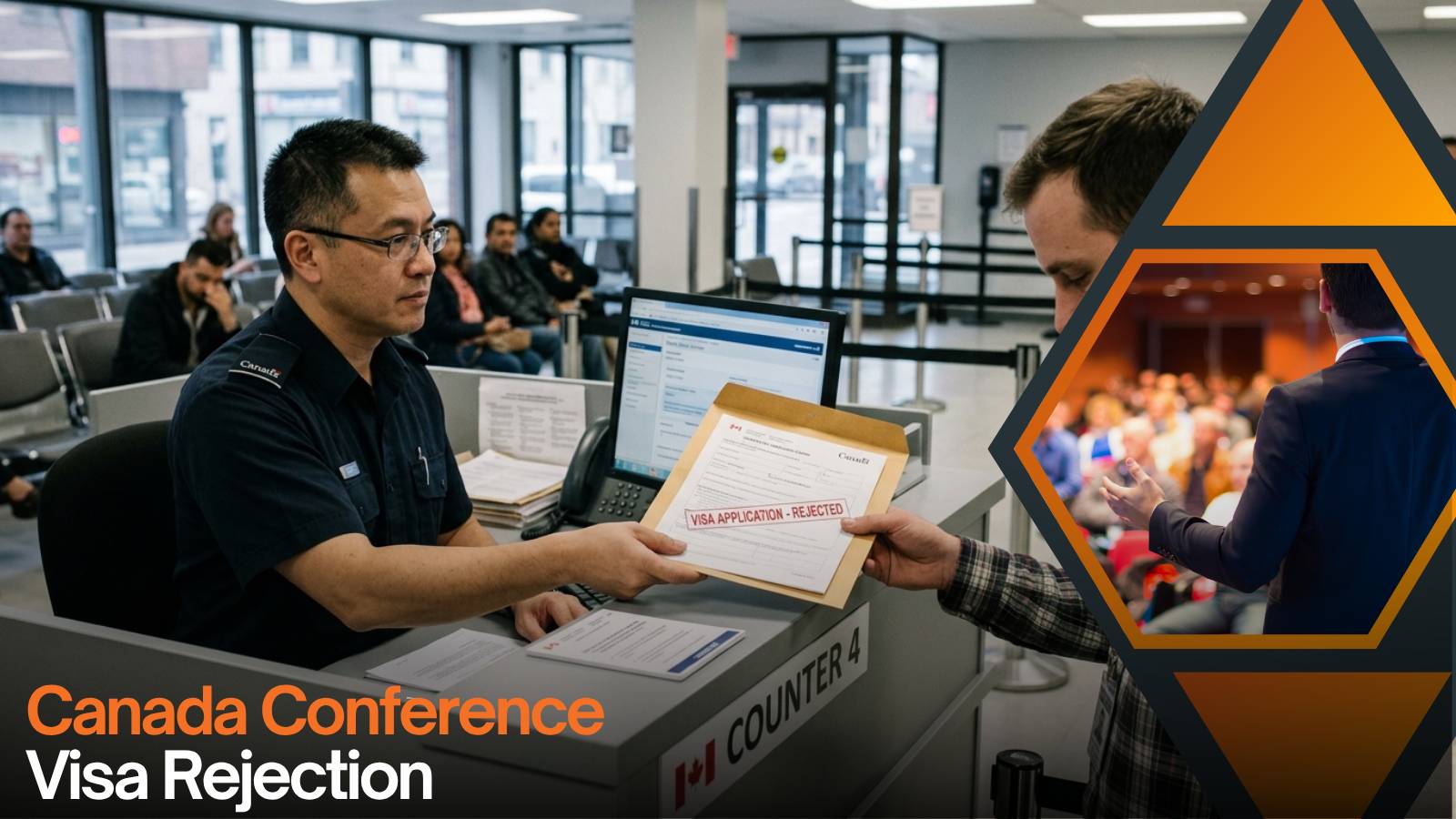
Canada conference visas are often rejected due to unclear travel purpose, weak financial proof, insufficient home ties, doubts under Section 179(b), incomplete documents, poor travel history, or inconsistent information. To fix these issues, applicants should submit a strong invitation letter, maintain stable finances, provide proper employment or business proof, and ensure all documents are accurate and consistent.
Understanding these rejection reasons and applying the correct fixes helps in building a strong and credible application for a successful canada Conference Visa outcome. Below get to know the key causes of visa refusal and how applicants can improve their chances of approval.
What is a Canada Conference Visa?
A Canada conference visa is not a separate visa category; instead, it is a purpose under the Visitor Visa (Temporary Resident Visa). Applicants use it when they plan to enter Canada to attend conferences, seminars, workshops, trade shows, or Academic events.
Immigration authorities issue this visa to professionals, researchers, students, entrepreneurs, corporate employees, and industry experts who receive a formal invitation to participate in a recognized event in Canada. The applicant must secure an official invitation letter from a Canadian organization or conference host, which confirms the event details and their participation.
Unlike a tourist visit, this visa serves a strictly professional or academic purpose. The applicant must clearly demonstrate that they will stay in Canada temporarily and return to their home country after the event ends. Immigration officers usually approve the visa for a short duration that matches the conference or event schedule.
Top Canada Conference Visa Rejection Reasons
Canada conference visa applications are often refused due to weak documentation, unclear intent, or insufficient proof of eligibility. Understanding these rejection reasons helps applicants prepare stronger and more credible applications.
Below find the main refusal reasons and provides practical fixes for each one to improve approval chances.
1. Weak or Unclear Travel Purpose
Applicants often fail to clearly explain the purpose of their visit. Missing conference details, vague agendas, or lack of proper justification creates doubt. In some cases, applicants also submit an application without a valid invitation letter or registration proof.
How to Fix:
- Clearly mention the conference name, date, and location
- Attach a valid invitation letter from the host organization
- Include registration confirmation, agenda, or event brochure
- Write a strong purpose statement explaining why you must attend
2. Insufficient Financial Proof
Applicants get rejected when they cannot prove they can cover travel, accommodation, and living expenses. Issues like low bank balance or sudden unexplained deposits raise suspicion.
How to Fix:
- Maintain a stable bank balance for at least 3–6 months
- Avoid large sudden deposits without explanation
- Provide income proof, salary slips, or business documents
- Show complete funding for travel + stay + return expenses
3. Lack of Strong Home Country Ties
Visa officers reject applications if they believe the applicant may not return. Weak ties such as unstable job, no business, or lack of family/property commitments increase rejection risk.
How to Fix:
- Provide proof of stable employment or business ownership
- Submit documents showing property, family, or long-term responsibilities
- Include leave approval letter from employer
- Demonstrate strong reasons to return home after the event
4. Doubtful Return Intent (Section 179(b))
Under Section 179(b), officers may refuse the visa if they suspect the applicant might stay illegally. A weak travel history or past overstays can trigger this concern.
How to Fix:
- Show clear return plans and commitments in home country
- Provide previous travel history with timely returns
- Attach job continuity or business obligations
- Write a strong cover letter explaining intent to return
5. Incomplete or Incorrect Documents
Applications are rejected due to missing or incorrect paperwork such as incomplete forms, invalid passport copies, or missing invitation letters.
How to Fix:
- Use a document checklist before submission
- Ensure all forms are accurately filled and signed
- Attach a valid passport with sufficient validity
- Double-check all supporting documents for consistency
6. Poor Travel History
Applicants with no international travel history or past visa refusals may appear high-risk to officers.
How to Fix:
- Build travel history with short international trips first
- Provide explanation for any previous refusals (if applicable)
- Include proof of lawful return from earlier visits
- Strengthen profile with professional achievements and stable income
7. Employer or Institutional Letter Issues
Weak or unverifiable sponsorship or employer letters reduce credibility. Fake or unclear company details also lead to rejection.
How to Fix:
- Submit an official employer sponsorship or leave approval letter
- Ensure company details are verifiable and authentic
- Include job designation, salary, and employment duration
- Use official letterhead with authorized signatures and contact details
8. Misrepresentation or Inconsistencies
Providing false documents or inconsistent information across forms is a serious issue and often leads to refusal or bans.
How to Fix:
- Ensure all details are truthful and consistent across documents
- Avoid submitting fake or altered documents
- Cross-check information in forms, letters, and financial records
- Maintain complete transparency throughout the application
Understanding Canada Visa Refusal Letter
A refusal letter issued by Canadian immigration does not always explain the full reasoning in detail. It usually contains general refusal codes that may include financial concerns, purpose doubts, or intent issues.
However, behind every refusal letter, there is a detailed officer assessment recorded in internal notes. Many applicants misunderstand the refusal and reapply without addressing the actual problem.
Proper analysis of refusal reasons is essential before submitting a new application, as repeating the same mistakes often leads to repeated rejection.
Required Documents for Canada Conference Visa
Applicants must submit the correct documents to prove their travel purpose, financial stability, and intention to return home after the conference. Complete and accurate paperwork helps improve approval chances and reduces the risk of visa rejection.
1. Valid Passport: A passport with sufficient validity and blank pages for visa stamping.
2. Conference Invitation Letter: An official invitation from the conference organizer with event details and participation confirmation.
3. Registration Confirmation: Proof of conference registration, payment receipt, or confirmation email.
4. Proof of Funds: Bank statements, salary slips, tax returns, or sponsorship proof showing enough funds for the trip.
5. Employment or Business Documents: Employment letter, leave approval, business registration, or company documents proving professional stability.
6. Travel Itinerary: Flight reservations and a detailed travel schedule for the Canada visit.
7. Accommodation Proof: Hotel booking, Airbnb reservation, or host accommodation details.
8. Visa Application Forms and Photograph: Completed visa forms and passport-size photographs as per Canadian visa requirements.
9. SOP / Cover Letter: A clear letter explaining the conference purpose, travel plan, and intention to return home after the event.
Expert Tips to Improve Approval Chances
A strong and well-organized application can improve Canada conference visa approval chances. Proper documentation, financial stability, and clear travel intent play an important role in the decision process.
- Apply early before conference dates
- Avoid sudden large bank transactions
- Maintain stable financial records
- Keep all documents accurate and consistent
- Match SOP details with supporting documents
- Submit a clear and professional application
- Include a strong invitation letter
- Show strong home country ties
- Provide complete travel and accommodation details
- Double-check forms before submission
By understanding the common rejection factors, required documents, and expert approval tips discussed above, applicants can prepare a stronger and more credible Canada conference visa application with greater confidence.
FAQs
1. Can I reapply after a Canada conference visa rejection?
Yes, applicants can reapply after rejection. However, they should first identify the refusal reasons and correct the issues before submitting a new application.
2. Is IELTS required for a Canada conference visa?
No, IELTS or other language tests are generally not required for a Canada conference visa because it falls under the visitor visa category.
3. Can students apply for a Canada conference visa?
Yes, students can apply if they receive a valid conference invitation and can prove financial support, academic relevance, and return intent.
4. Does conference registration payment improve visa approval chances?
Yes, paid conference registration receipts can strengthen the application because they show genuine participation intent.
5. Can a sponsor support my Canada conference visa application?
Yes, a family member, employer, university, or organization can sponsor the trip by providing sponsorship letters and financial proof.
6. Is travel insurance mandatory for a Canada conference visa?
Travel insurance is not always mandatory, but it can strengthen the application and show proper travel preparation.
7. Can I attend multiple conferences on one Canada visitor visa?
Yes, applicants may attend multiple professional or academic events if the travel purpose and itinerary are clearly explained in the application.
8. What happens if I miss my conference after getting the visa?
Missing the conference does not automatically cancel the visa, but future applications may face additional scrutiny if travel purpose inconsistencies appear.
9. Can freelancers or self-employed professionals apply for a Canada conference visa?
Yes, freelancers and self-employed professionals can apply by providing business proof, income records, client details, and financial documents.
10. Does previous Canada visa refusal affect future applications?
Yes, previous refusals can affect future applications if the applicant fails to address the earlier refusal reasons properly.