
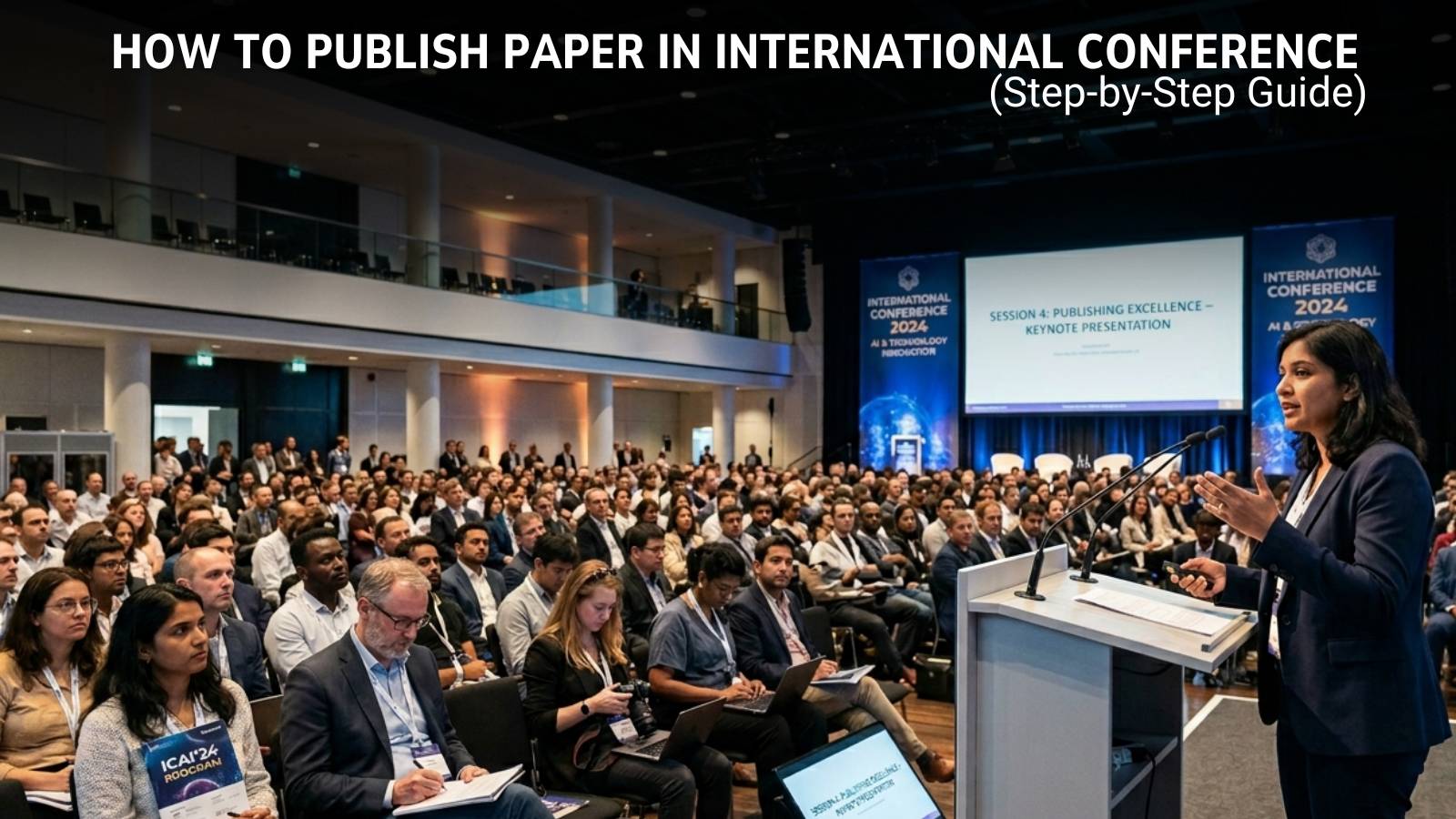
An International Conference Paper is one of the most powerful and fastest ways to showcase original research to a global Academic audience. It provides a platform for students, researchers, and professionals to present innovative ideas, receive expert feedback, and gain international recognition in their field. Publishing in reputed conferences not only strengthens your academic profile but also opens doors to collaborations, higher studies, and career opportunities.
Below find a complete step-by-step guide on how to publish a paper in international conferences, covering the entire process from preparation to acceptance, along with benefits, costs, and common mistakes to avoid for successful publication.
What Is an International Conference Paper?
An international conference paper is a scholarly research document submitted to a conference committee for review and potential presentation at a conference attended by researchers, academicians, scientists, and professionals from multiple countries. These papers typically present original research findings, innovative methodologies, theoretical advancements, experimental results, or practical applications within a specific field.
Unlike journal publications, conference papers are often designed to communicate recent research developments quickly. Researchers use conferences as a platform to introduce new ideas, discuss emerging trends, and receive valuable feedback before expanding their work into journal articles.
Conference papers are generally published in conference proceedings, which serve as official records of the research presented during the event. Depending on the conference, proceedings may be indexed in recognized databases such as Scopus, Web of Science, Google Scholar, EI Compendex, or other academic repositories.
Conference Papers vs. Journal Papers
Although both conference papers and journal articles contribute to academic literature, they differ in several important aspects.
Conference papers usually undergo a shorter review process and are published more quickly. Researchers can present their findings to a live audience and receive immediate feedback. Journal articles, on the other hand, often require a more rigorous review process and may take several months or even years to be published.
Conference publications are particularly valuable in fast-moving disciplines such as computer science, artificial intelligence, information technology, engineering, and data science, where rapid dissemination of research is essential.
Why Publish a Paper in an International Conference?
Publishing in an international conference offers numerous benefits that extend beyond simply adding a publication to your academic profile.
Academic Benefits
Conference publications demonstrate a researcher’s ability to conduct original research and communicate findings effectively. Universities and research institutions often consider conference publications when evaluating candidates for admissions, scholarships, fellowships, and faculty positions.
A conference publication also increases the visibility of your research within your academic community. Once your work becomes accessible through conference proceedings and indexing databases, other researchers can discover, cite, and build upon your findings.
Career Benefits
Employers increasingly value candidates who have published research papers. Conference publications indicate strong analytical thinking, problem-solving abilities, and technical expertise.
For students seeking higher education opportunities, conference publications can strengthen applications for master’s programs, PhD admissions, research assistantships, and international scholarships. Similarly, professionals working in industry can use conference publications to demonstrate expertise and establish themselves as thought leaders in their domain.
Research Benefits
International conferences bring together experts from diverse backgrounds and geographical regions. Presenting your research allows you to receive constructive criticism, identify potential improvements, and discover new perspectives on your work.
Networking opportunities at conferences often lead to collaborative projects, joint publications, grant opportunities, and long-term research partnerships.
Step-by-Step to Publish Paper in International Conference
Publishing a research paper in an international conference is an excellent way to share your findings with the global academic community. Following a structured process can significantly improve your chances of acceptance and publication.
Step 1: Choose a Research Topic
Selecting the right research topic is the foundation of a successful conference paper. Your topic should be relevant, researchable, and capable of contributing something new to your field.
- Select a relevant and interesting research area.
- Identify research gaps from existing studies.
- Focus on trending topics in your field.
- Choose a topic that offers original contributions.
Step 2: Conduct Quality Research
High-quality research provides the evidence and credibility needed for a strong paper. This stage involves collecting accurate data and analyzing it using appropriate methods.
- Perform a thorough literature review.
- Collect reliable data and evidence.
- Select an appropriate research methodology.
- Avoid common mistakes such as weak analysis and insufficient references.
Step 3: Write Your Research Paper
A well-written paper clearly presents your research objectives, methods, and findings. Following a standard structure helps reviewers understand your work effectively.
Standard Paper Structure
- Title
- Abstract
- Keywords
- Introduction
- Literature Review
- Methodology
- Results and Discussion
- Conclusion
- References
Writing Tips
- Follow the conference template.
- Use clear and concise language.
- Proofread carefully before submission.
Step 4: Find the Right International Conference
Choosing the right conference is just as important as writing a good paper. A reputable conference can increase the visibility and impact of your research.
Trusted Conference Platforms
- Conference Alerts
- EasyChair
- IEEE Conferences
- Springer Conferences
- ACM Conferences
- Elsevier Conferences
Factors to Consider
- Conference Reputation
- Publisher
- Indexing Status
- Acceptance Rate
- Registration Fee
- Location and Dates
Step 5: Verify Conference Authenticity
Not all conferences maintain high academic standards. Verifying a conference’s legitimacy helps protect your research from predatory publishers and fake events.
Red Flags to Watch For
- Guaranteed acceptance
- Extremely fast review process
- Unclear publisher information
- Poor website quality
- Spam email invitations
Always verify the conference’s publisher, review process, and past editions.
Step 6: Understand the Call for Papers (CFP)
The Call for Papers (CFP) outlines what the conference expects from authors. Reading it carefully ensures your submission meets all requirements.
Important Information in a CFP
- Conference Scope
- Submission Guidelines
- Formatting Requirements
- Research Topics
- Important Deadlines
Step 7: Prepare Your Manuscript According to Guidelines
Every conference has specific formatting and submission requirements. Following these guidelines reduces the risk of rejection due to technical issues.
- Use the official conference template.
- Follow the required citation style.
- Create a properly formatted PDF file.
- Ensure compliance with similarity requirements.
Step 8: Check Plagiarism Before Submission
Most conferences have strict plagiarism policies. Checking similarity before submission helps maintain academic integrity and avoids unnecessary rejection.
Acceptable Similarity Range
- Ideally below 10%
- Usually acceptable below 15–20%
Popular Tools
- Turnitin
- iThenticate
- Grammarly Plagiarism Checker
Step 9: Submit Your Paper
Once your manuscript is ready, upload it through the conference submission system. Ensure all author details and required documents are entered correctly.
Popular Submission Platforms
- EasyChair
- Microsoft CMT
- OpenConf
- Ex Ordo
Submission Process
- Create an account.
- Upload your paper.
- Enter author information.
- Submit and receive confirmation.
Step 10: Navigate the Peer Review Process
After submission, your paper undergoes peer review by subject experts. Their feedback helps determine whether your paper meets the conference’s quality standards.
Reviewers evaluate:
- Originality
- Technical Quality
- Research Contribution
- Methodology
- Presentation Quality
Step 11: Respond to Reviewer Comments
Reviewer feedback is an opportunity to improve your paper. Addressing comments carefully can significantly increase your chances of final acceptance.
- Review all comments thoroughly.
- Make necessary revisions.
- Explain changes clearly.
- Submit the revised manuscript on time.
Step 12: Receive Acceptance Notification
After the review process, the conference committee will inform you of the decision. Carefully read the acceptance letter and follow the provided instructions.
Possible outcomes:
- Accepted
- Conditionally Accepted
- Rejected
Step 13: Complete Registration and Copyright Requirements
Accepted authors must complete registration and submit required publication documents. Missing these steps can affect the publication of your paper.
Important requirements include:
- Author Registration
- Copyright Form Submission
- Camera-Ready Paper Submission
- Final Publication Documents
Step 14: Prepare Your Conference Presentation
Presenting your research effectively is essential for communicating your findings. A well-prepared presentation leaves a positive impression on attendees and reviewers.
Presentation Preparation Tips
- Create clear slides.
- Highlight key findings.
- Use visual aids where appropriate.
- Practice multiple times before the event.
Step 15: Present Your Paper at the Conference
Conference presentations allow you to showcase your research and engage with experts in your field. They also provide valuable networking opportunities.
During the Conference
- Present confidently.
- Manage time effectively.
- Answer questions professionally.
- Connect with other researchers.
Step 16: Get Your Paper Published in Conference Proceedings
After the conference, accepted papers are typically published in the official proceedings. This makes your research accessible to a wider academic audience.
Publication benefits may include:
- DOI Assignment
- Digital Library Publication
- Global Research Visibility
- Citation Opportunities
Step 17: Check Whether Your Paper Is Indexed
Indexing improves the discoverability and academic impact of your research. Many researchers prefer conferences whose proceedings are indexed in major databases.
Popular Indexing Databases
- Scopus
- Web of Science
- EI Compendex
- Google Scholar
- DBLP
Verify indexing status using the conference website, paper title, or DOI.
Common Reasons Papers Get Rejected in International Conferences
Getting a paper accepted at an international conference can be challenging because reviewers evaluate submissions based on quality, originality, and relevance. Understanding the common reasons for rejection can help authors improve their manuscripts and increase their chances of acceptance.
1. Poor Research Quality
Research papers that lack depth, accuracy, or sufficient evidence are often rejected. Reviewers expect well-supported findings and a clear contribution to the field.
2. High Plagiarism
Most conferences have strict plagiarism policies and use similarity-checking tools. Papers containing copied content or excessive similarity may be rejected immediately.
3. Weak Methodology
A poorly designed research methodology can reduce the credibility of the study. Authors must clearly explain their research methods, data collection process, and analysis techniques.
4. Formatting Errors
Ignoring conference formatting guidelines can create a negative impression during the review process. Incorrect templates, citation styles, or page layouts often lead to rejection.
5. Lack of Novelty
International conferences prefer papers that offer new ideas, innovative solutions, or unique findings. Research that simply repeats existing work without meaningful contributions is less likely to be accepted.
6. Out-of-Scope Topics
Every conference focuses on specific research areas and themes. Papers that do not align with the conference scope are commonly rejected regardless of their quality.
Cost of Publishing a Paper in an International Conference
Publishing in an international conference involves several types of costs depending on the conference type, publisher, and location. These expenses usually include registration fees, publication charges, travel costs, and optional virtual participation fees, along with possible funding support options.
1. Registration Fees
The registration fee is mandatory for all accepted papers to be included in the conference proceedings. It varies based on the conference type and country.
- Student Registration: ₹3,000 – ₹10,000 (or $50 – $150)
- Regular Author Registration: ₹8,000 – ₹25,000 (or $100 – $300)
- IEEE / Springer Conferences: ₹15,000 – ₹40,000+ (or $200 – $500+)
- Includes paper presentation + publication in proceedings
2. Publication Charges
Some conferences charge separate publication or page fees depending on paper length and publisher rules.
- Extra page charges: ₹1,000 – ₹3,000 per page
- Open-access publication fee: ₹10,000 – ₹50,000+
- Includes DOI assignment and indexing support (Scopus/IEEE etc.)
3. Travel Expenses
For offline conferences, travel and accommodation are major additional costs.
- Domestic travel: ₹5,000 – ₹20,000
- International travel: ₹50,000 – ₹2,00,000+
- Hotel stay: ₹2,000 – ₹10,000 per night
- Includes flight/train, food, and local transport
4. Virtual Conference Costs
Virtual conferences are more affordable compared to physical attendance.
- Virtual registration fee: ₹2,000 – ₹10,000 (or $30 – $120)
- No travel or hotel expenses required
- Includes online presentation + digital proceedings publication
5. Funding Opportunities
Many researchers reduce costs using grants and funding support.
- University research grants
- Government funding schemes (UGC, DST, AICTE in India)
- IEEE/ACM student travel grants
- Scholarships and fee waivers (select conferences)
- Can cover registration, travel, or publication costs
To sum up, an international conference paper helps showcase research globally and build academic recognition. With originality and proper preparation, it improves acceptance chances and supports academic and professional growth.
FAQs
1. How can a student publish a paper in an international conference?
Prepare a research paper, submit it to a conference via platforms like EasyChair/CMT, and get it accepted after peer review for publication.
2. Can I publish a conference paper without a professor?
Yes, you can publish independently, but a professor’s guidance improves quality and acceptance chances.
3. How long does conference publication take?
Usually 1–6 months, depending on review process and conference schedule.
4. Is Scopus indexing guaranteed after acceptance?
No, Scopus indexing is not guaranteed; it depends on the conference’s approval status.
5. Can I publish the same paper in a journal later?
Yes, but only if it is significantly improved or extended, not the same version.
6. What is the average conference acceptance rate?
Typically 10%–50% depending on conference quality.
7. How much does international conference publication cost?
Around ₹3,000 to ₹2,50,000+, depending on conference type and travel.
8. Are online conferences valid for publication?
Yes, if organized by reputed publishers with proper peer review and proceedings.