
CVPR 2026 in Denver: Dates, Submissions, Tips & Research Trends
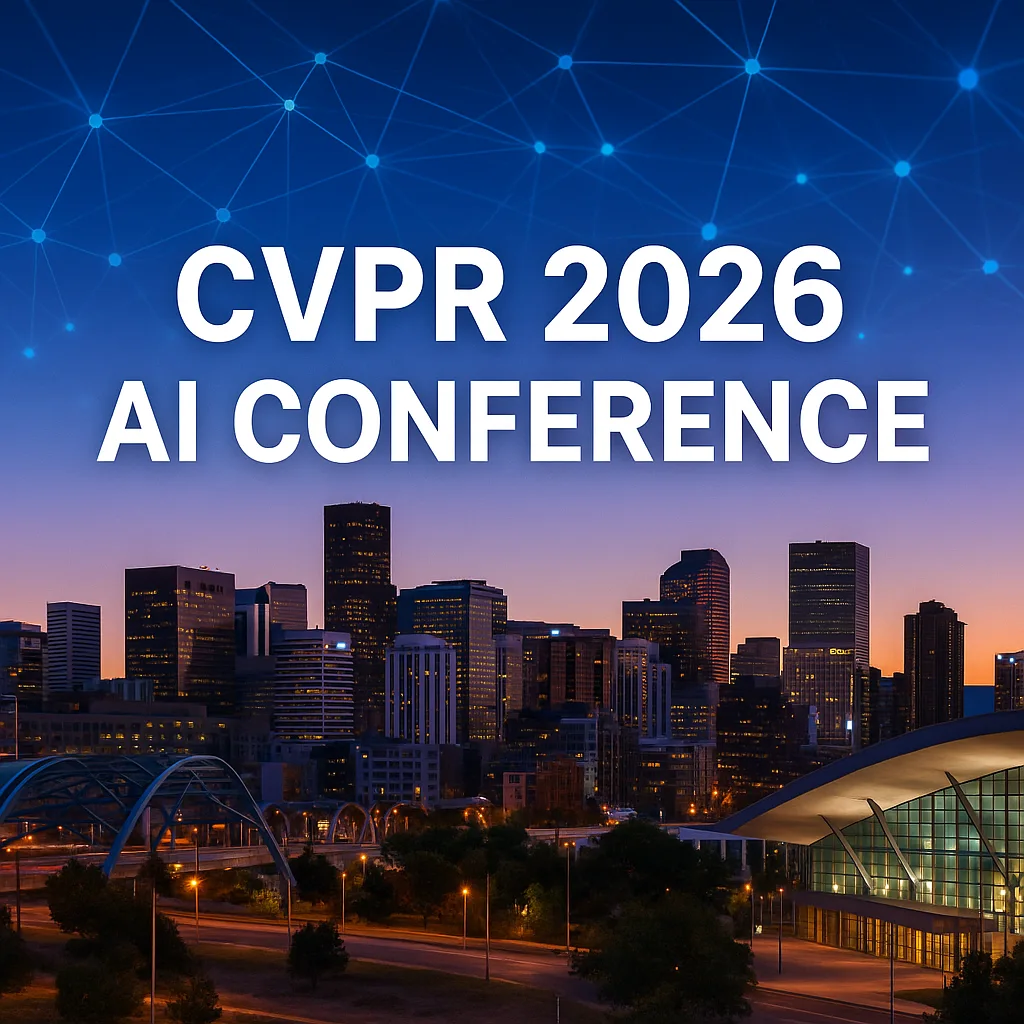
The Conference on Computer Vision and Pattern Recognition (CVPR) is one of the world’s top events in the field of artificial intelligence and computer vision. In 2026, CVPR will be hosted in the vibrant city of Denver, Colorado, bringing together researchers, professionals, students, and innovators from across the globe.
Submitting a paper, attending to learn about the latest breakthroughs, or just exploring future trends in AI, Find the event dates, submission process, research topics, and useful tips for attendees.
CVPR 2026 : Event Details & Logistics
CVPR 2026 will bring together global experts in computer vision for a week of keynotes, paper presentations, workshops, and industry exhibitions. Conference will offer both in-person and virtual attendance options, with clear schedules, venue maps, and registration details provided in advance.
Attendees can expect streamlined logistics, accessible accommodation options, and well-organized on-site support to ensure a smooth and productive conference experience.
Venue: Denver, Colorado
Dates: June 3–7, 2026
City: Denver, Colorado, USA
Venue: Likely to be the Colorado Convention Center, Check for more details .
Who Should Attend? Researchers, industry professionals, students, and anyone interested in AI, robotics, and computer vision.
Important Deadlines:
- Paper submission deadline: Usually around early November 2025
- Rebuttal phase: Typically in January 2026
- Acceptance notifications: Around mid-February 2026
- Camera-ready deadline: March 2026
- Registration opens: Early 2026
Key Logistics
- Registration: Opens early 2026. Early bird passes are limited—watch cvpr.thecvf.com.
- Pass Types: Main conference, workshop-only, exhibitor-only. Prices vary.
- Is it free to attend exhibits? No, an official pass is required—even for the exhibitor area.
- Hotels & Travel: Expect high demand. Book early for hotels near the convention center.
How to Register & Attend CVPR 2026
Registration for CVPR 2026 will be handled through the official conference website, where attendees can choose from early-bird, regular, and on-site passes. Both in-person and virtual attendance options will be available, each providing access to keynotes, technical sessions, workshops, and tutorials.
Once registered, participants will receive a confirmation email with event schedules, venue details, and instructions for joining physical or online sessions. Early registration is strongly encouraged, as workshop seats, tutorial slots, and special events tend to fill up quickly.
CVPR typically offers different types of passes:
- Main Conference Pass – Includes access to all sessions, keynotes, and posters.
- Workshop/Tutorial Pass – For specialized topics and smaller group learning.
- Exhibitor-Only Pass – Limited access, typically for industry professionals showcasing their products.
Important tip: CVPR often reaches capacity quickly. Early registration is strongly advised—watch the official site for when tickets go live in early 2026.
Paper Submission Guidelines for CVPR 2026
Submitting a research paper to CVPR 2026 requires careful attention to formatting, anonymity, and documentation. Authors must follow the official guidelines to ensure their work meets the conference’s high standards for peer review. Find the key requirements and common challenges to keep in mind during the submission process.
➤ Key Requirements:
- Double-blind review: Don’t include author names in your submission.
- Formatting: Use the official CVPR LaTeX template and follow word/page limits.
- Code submission: Strongly encouraged—add a GitHub link or supplementary zip file.
- OpenReview profile: Must be up-to-date, with declared conflicts of interest.
➤ Common Challenges:
- Some reviewers now expect code links by default.
- Conflicting reviews happen—craft a strong and respectful rebuttal.
- Meta-review outcomes can be unpredictable, so clarity and precision in writing are essential.
CVPR 2026 Accepted Papers
Official CVPR 2026 site has not yet published a full list of accepted papers. The conference organizers will release the final decisions by February 20, 2026, and the Computer Vision Foundation (CVF) will make the accepted papers publicly available approximately two weeks before the conference.
Review committee evaluates all submissions through a double-blind peer review process using OpenReview, keeping both authors and reviewers anonymous.
Authors submit a Compute Reporting Form along with their supplementary materials. This form documents computational resources such as training time and hardware specifications. A separate committee reviews these forms to recognize papers that demonstrate efficiency and transparency, but the reports do not affect acceptance decisions.
Area Chairs (ACs) review feedback from the reviewers and the authors’ responses, then recommend papers for oral sessions, spotlight presentations, or poster sessions. The program chairs use these recommendations and meta-reviews to make the final acceptance decisions.
Once the accepted papers are published, readers will gain insights into the latest research, emerging trends, and notable contributions showcased at the conference.
Truth Behind the Paper Submission Hype
Submitting to CVPR isn’t just about good research—it’s a psychological game. Authors on Reddit and Quora openly share their anxiety: Will the reviewers be fair? Should I gamble on a bold idea or play it safe with incremental improvements?
Many young researchers are stressed not just about getting in, but about being noticed. A strong submission now means:
- Linking code (even if reviewers don’t run it).
- Using flashy visuals or novel problem definitions.
- Making sure your paper gets discussed on social media.
“I spent more time debugging code for a demo video than writing the paper,” one PhD student joked on Reddit. That’s the new normal.
Trending Research Themes at CVPR 2026
CVPR 2026 will likely spotlight exciting and emerging areas of computer vision. Based on current trends and previews, you can expect sessions and workshops on:
- Foundation Models: Vision-language transformers, multi-modal AI, and large pre-trained vision models.
- Generative AI: Diffusion models, GANs for 3D video, and creative synthesis applications.
- 3D Vision & Scene Reconstruction: Innovations in LiDAR, NeRFs, and single-view 3D generation.
- Embodied AI: Systems that interact with the world via robotics or AR/VR platforms.
- Efficient AI: Models built for edge devices, mobile deployment, and low-latency use cases.
- Fairness & Accessibility: Designing AI tools that are inclusive, transparent, and usable across diverse populations.
- Autonomous Systems: Breakthroughs in self-driving cars, drone perception, and robotic vision.
First-Time Attendees: How to Make the Most of It
Tips for First-Time Attendees
Attending CVPR for the first time? It can be overwhelming, but here are a few strategies to help you make the most of your time:
✔️ Plan Ahead:
- Use apps like Whova (if CVPR supports it) or build your own session calendar.
- Choose a mix of oral talks, poster sessions, and workshops to get a well-rounded experience.
✔️ Network Smartly:
- Introduce yourself at posters—authors are usually eager to chat.
- Visit exhibitor booths in the early morning or late afternoon for more personal interaction.
- Follow the #CVPR2026 hashtag on X (formerly Twitter) and Reddit to find unofficial meetups or socials.
✔️ Don’t Miss:
- Keynotes from AI pioneers and influential researchers.
- Industry panels that discuss real-world applications and hiring trends.
- First-time attendee meetups often organized by CVPR volunteers or research groups.
Travel & Accommodation Advice for CVPR 2026
Denver will be busy during CVPR week, so plan your trip early. Most attendees prefer staying near the Colorado Convention Center to save commuting time.
- Book your hotel by March 2026 for the best options.
- Denver International Airport (DEN) has solid connections to most major cities.
- Consider local transport like the RTD Light Rail or rideshares to get around easily.
Checklist for CVPR 2026
Here’s a quick reminder list to keep your planning on track:
- Finalize and submit your paper (if you’re submitting)
- Update OpenReview profile and declare conflicts
- Register early and select the right pass
- Book hotel and flights well in advance
- Follow key researchers and hashtags for real-time updates
- Prepare a 1-minute intro about your work or interests for networking
Final Tips & Resources for CVPR 2026
- Before You Go:
- Finalize OpenReview profile.
- Declare all conflicts of interest.
- Prepare a short “elevator pitch” about your work.
- Resources:
CVPR 2026 is global hub for cutting-edge research, real-world applications, and future-shaping discussions in AI. Whether you’re attending to learn, present, or connect, the event offers something for everyone in the AI ecosystem. Prepare early, engage deeply, and enjoy your time in Denver!
If you’re interested in pushing the boundaries of what machines can see and understand, CVPR is the place to be in 2026. Below are some frequently asked questions and answers that will help you make informed decisions about attending CVPR 2026.
FAQ
Q1: Where will CVPR 2026 be held?
CVPR 2026 will be hosted in Denver, Colorado, from June 6 to June 12, 2026.
Q2: When does registration for CVPR 2026 open?
Registration is expected to open in early 2026. Early bird rates usually apply, so keep an eye on the official website.
Q3: Can I attend CVPR without submitting a paper?
Yes, you can attend as a general participant. It’s open to students, researchers, professionals, and enthusiasts. Just register for the appropriate pass.
Q4: Do I need to submit code with my paper?
While not mandatory, code submission is highly encouraged. It strengthens your paper’s credibility and helps reviewers.
Q5: What are some of the key research themes at CVPR 2026?
Hot topics include vision-language models, diffusion models, embodied AI, autonomous driving, 3D vision, and accessibility in AI.
Q6: How should I prepare for my first CVPR?
Plan your schedule, book accommodation early, finalize your OpenReview profile, and prepare a short intro about your work. Engage in networking and attend both talks and poster sessions.